

Regarded by some as a form of Aylostera atrovirens. A beautiful plant with velvety dark red flowers. The description is
Aylostera zecheri (Rausch) Mosti & Papini

Regarded by some as a form of Aylostera atrovirens. A beautiful plant with velvety dark red flowers. The description is
Regarded by some as a form of Aylostera atrovirens. Dusky red flowers. Found to be distinctive enough to retain specific
Regarded by some as a form of Aylostera pygmaea, A. haagei or A. eos. There are plants in nurseries labelled
Regarded by some as a form of Aylostera supthutiana, A. schatzliana or of A. pygmaea. Originally described by Rausch as
Lobivia (Aylostera) steinmannii var. tuberculata (tuberculata) was first described by Walter Rausch in Lobivia 85, pp. 129 and 145, in
Regarded by some as a form of Aylostera steinmannii, indeed, first described as such by Rausch. The difference from the
Rebutia (Aylostera) torquata was first described by Friedrich Ritter and Albert Frederik Hendrik Buining in Succulenta 56 (3), p. 63,
A very attractively-stemmed plant, the short spines along very well defined ribs, often spiralling around, with clear space between each
Aylostera tafnaensis was first described as a variety of Lobivia (Aylostera) pygmaea by Walter Rausch in Lobivia 85, pp. 116
Regarded by many as yet another form of Aylostera pygmaea. Stated by Rausch (who described it as a form of
A distinctive, comparatively large plant with long, dense spines and white or pale pink to orangy-pink flowers only recently described,
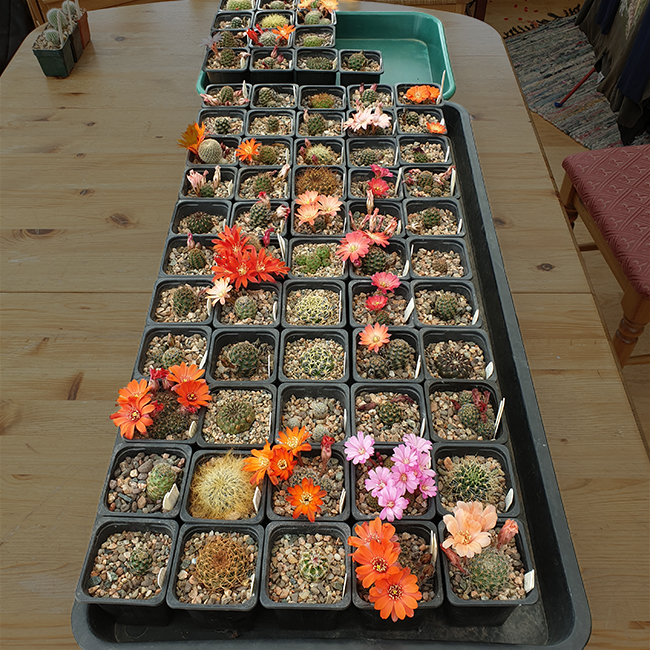
Yesterday I received a wonderful gift of plants from Allan Armitage in Orkney, courtesy of my friend Colin Corse who