

A steinmannii is a species which covers a vast area of many thousands of square kilometres, albeit always at high
Aylostera steinmannii (Solms) Backeb.

A steinmannii is a species which covers a vast area of many thousands of square kilometres, albeit always at high
Regarded by many as a form of A. steinmannii, but given specific status following studies by Most & Papini (2011).
Rebutia (Aylostera) aureiflora was discovered by C. Backeberg in Salta, Jujuy, Argentina and first described in Der Kakteenfreund 1, p.
Rebutia (Digitorebutia) raulii (Aylostera raulii) was first described in Kakteen und andere Sukkulenten, the journal of Deutsches Kakteen-Gesellschaft, 31: 170,
Aylostera applanata (Lobivia steinmannii (Solms-Laub.) Backbg. var. applanata Rausch) was first described, as a variety of L. steinmannii, by Walter
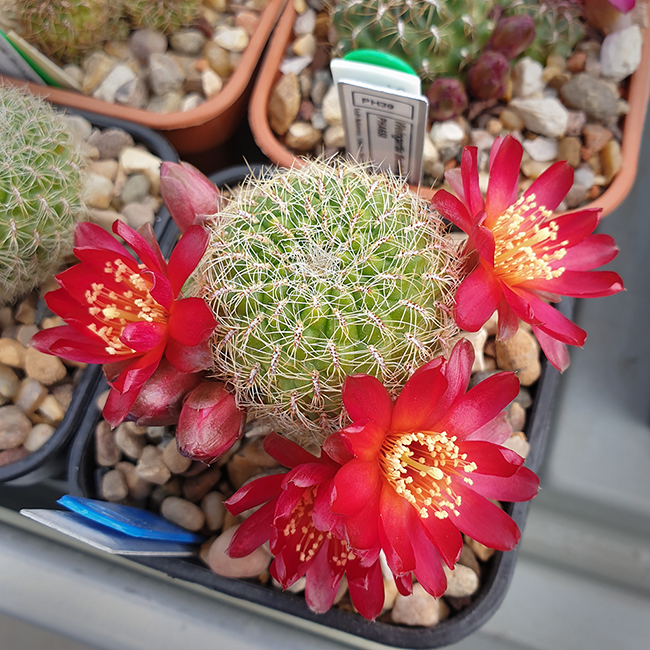
Weingartia (Sulcorebutia) fischeriana was first described by K. Augustin in Kakteen und Andere Sukkulenten 38 (9): 216, in 1987. Description
Regarded by some as a form of Aylostera fiebrigii (as are many others) or of Aylostera robustispina. Spination is strong
Previously regarded as a form of A. atrovirens, but different enough to be given specific status by Mosti and Papini
The more keen-eyed may have noticed a few changes to the website. I’ve started entering original descriptions for species, and
The original description of Lobivia (Aylostera) ritteri was published in Beiträge zur Sukkulentenkunde und-pflege, the journal of Deutschen Kakteen-Gesellschaft, by
Previously included in Aylostera atrovirens. See that species for details. A. ritteri is sometimes confused with A. pseudoritteri and it
There are quite a few plants in the National Collection for which the name hasn’t yet been decided or given.