

As the name suggests, a dark-spined plant, with attractive brown or yellowish-brown spines usually sticking out from the slightly glossy,
Aylostera fulviseta (Rausch) Mosti & Papini

As the name suggests, a dark-spined plant, with attractive brown or yellowish-brown spines usually sticking out from the slightly glossy,
This is a very distinctive Aylostera, with large clumps of flattened spheroid stems with prominent tubercles, and lots of bright
A species which has been in cultivation for many years, having been first described in 1905. The plant grows over
This species was first briefly described by Weber in 1904 (as Echinopsis deminuta), then more formally described as an Aylostera
Regarded by some as a form of Aylostera fiebrigii (as are many others). This species has distinctive almost double orange
Regarded by some as a form of Aylostera fiebrigii (as are many others). Numerous red flowers with white stigmas make
Regarded by some as a form of Aylostera deminuta or Aylostera pseudodeminuta. Initially there was confusion as both Ritter and
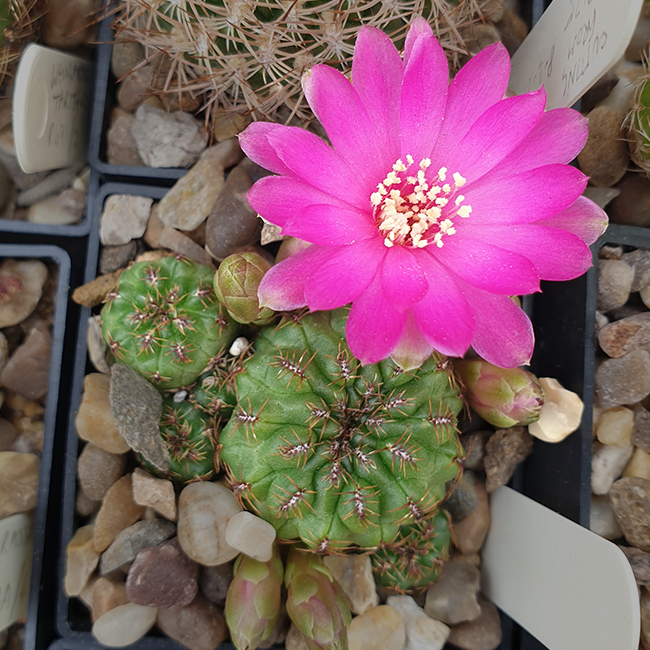
Found by Ralf Hillmann at Villa Redencion Pampa, Zudanez, Bolivia, at an altitude of 2750m.
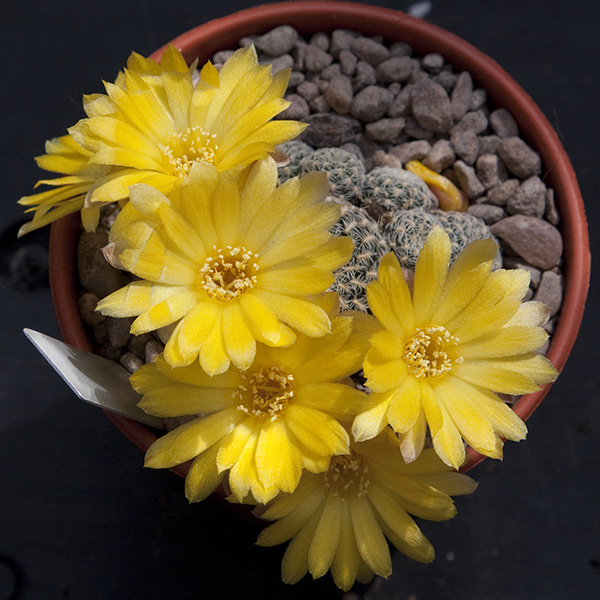
Weingartia (Sulcorebutia) langeri was first described by Augustin and Hentzschel in Kakteen und andere Sukkulenten, 50 (8): 201-2 in 1999.
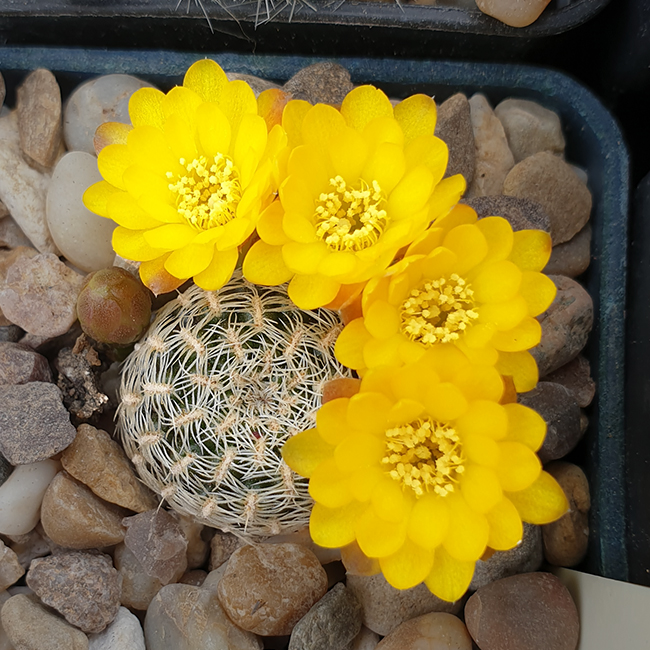
Found by Gerhard Köhres 50km south of Rio Choro, Pampa Grande, Bolivia.
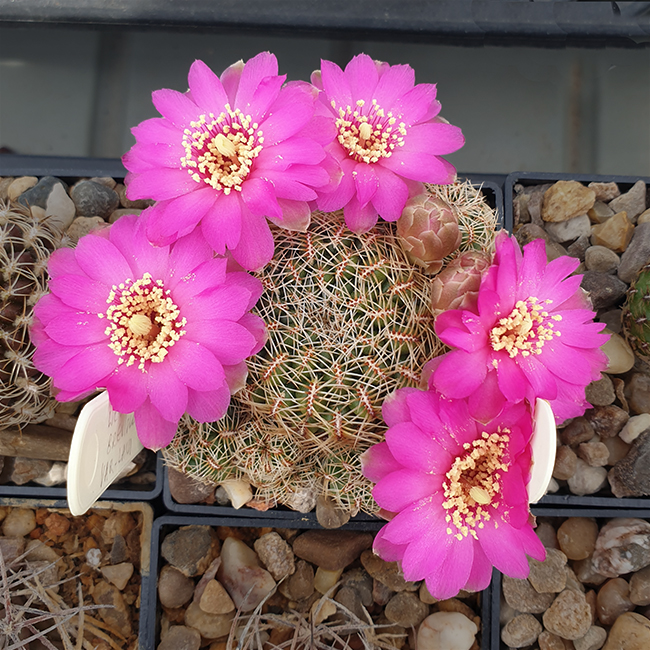
Found by Ralf Hillmann at Mojocoya Oeste, Zudanez, Chuquisaca, Bolivia, at an altitude of 2400m.
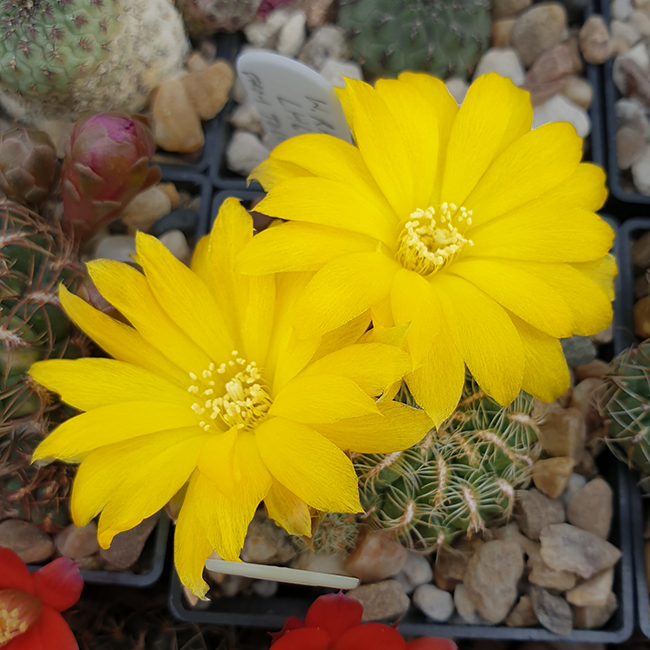
Weingartia (Sulcorebutia) elizabethae was first noted as Sulcorebutia mojocoyensis var. elizabethae by J. deVries in 1999, and subsequently described as